
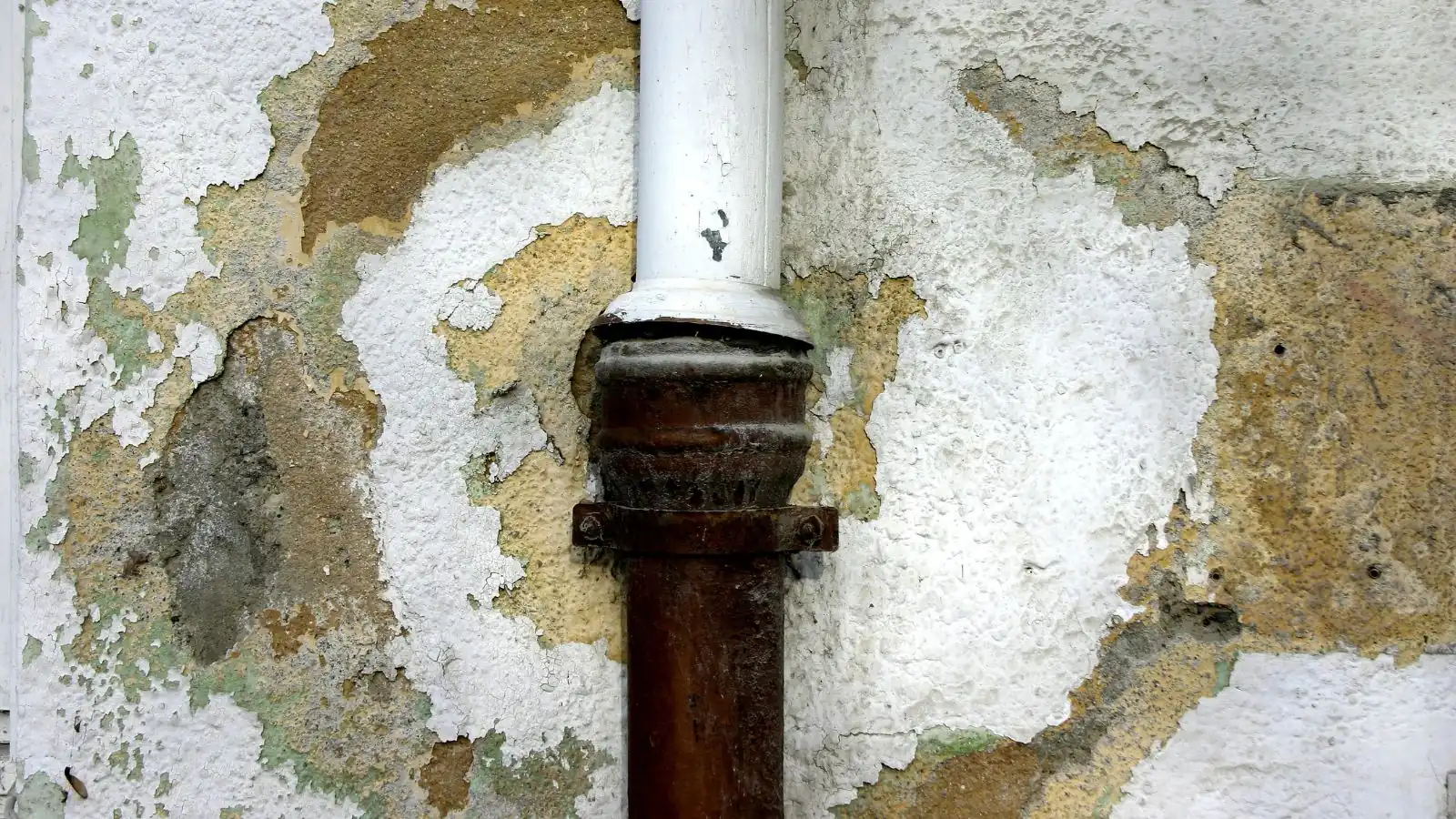
A house can look perfect and still hide a water problem. Fresh paint, a new floor or a staged basement can cover signs that matter. Buyers who know what to look for are better prepared to ask questions and to decide whether a deeper inspection is worth it. This guide is a layperson's checklist, not a replacement for a licensed home inspector or your attorney.
We restore water damage and we are not inspectors or real estate advisers. We cannot tell you whether to buy a particular house. What we can offer is a practical list of clues and the kinds of readings a crew can take, drawing on EPA guidance that moisture control is the key to mold control.
Outside first: roof, gutters and grading
- Look at the roof for missing, curled or stained shingles and for flashing that looks damaged
- Check that gutters are attached and that downspouts discharge away from the foundation
- Look at how the ground slopes near the foundation and whether water seems to collect
- Check windows and doors for rotted trim or failing caulk
- Look at exterior walls for stains, efflorescence or soft siding
Inside: ceilings, walls and floors
Walk each room slowly. Look up at ceilings for stains and rings, especially below bathrooms and under the roof. Run a hand along walls near windows, tubs and exterior corners. Notice paint that is fresh in just one patch, which can be a cover-up for an older stain. Check floors for soft spots, cupping or lifted edges, and look at baseboards for swelling.
Found a damp spot at a showing?
Call the 24/7 line. A crew can take moisture readings and explain what they mean.
Use your nose
A musty smell in a basement, closet or crawl space is a classic clue. EPA says you may suspect hidden mold if a building smells moldy but you cannot see the source. Be aware that a strong air freshener or fresh paint can mask odors, and that a house that has been closed up for a while smells different. Ask for a revisit on a humid day if possible.
Basement and crawl space
| Clue | What it can suggest |
|---|---|
| White mineral deposits on walls | Water moving through masonry over time |
| Rust at the base of the furnace or water heater | Water has been on the floor or tank is leaking |
| Water line or stain on stored items | Past water entry at that height |
| A sump pump with no discharge line or a dry, dusty pit | May be unused, or may be installed but untested |
| New paint or panels only on the lower wall | Possible cover-up of past water |
| Dehumidifier running in a finished space | A damp area that someone is managing |
See basement water damage cleanup and crawl space water damage to understand what past events look like. A dehumidifier is not proof of a problem, but it is a prompt to ask a question.
Kitchens, baths and laundry
Open the cabinet under each sink and look for stains, swollen panels and corrosion on the pipes. Check around toilets for soft flooring. Look at the caulk at tubs and showers. Check behind the washer if you can reach it, and look at the water heater for rust and for scorch or drip marks, see water heater leak cleanup.
Ask for records
- Ask whether there have been leaks, floods or repairs, and ask for the details in writing.
- Ask for the property condition disclosure statement, which in New York asks about water damage, flooding and mold testing.
- Ask whether there were insurance claims for water damage.
- Ask for invoices from plumbers, roofers or restoration companies.
- Ask your attorney and your inspector about anything that seems incomplete.
In New York, sellers of residential property complete a property condition disclosure statement that asks about rot or water damage, flooding and drainage problems, water penetration, flood zone and flood insurance, and whether the property has been tested for indoor mold. A clear answer with documents is reassuring. A vague answer is a reason to look further.
Insurance questions for buyers
The New York Department of Financial Services says standard homeowners policies do not cover flooding, and that flood coverage generally comes from a separate policy. Ask your agent about flood and sewer backup coverage before you close, and ask the seller about any history of flood claims. We cannot say what a policy will cover.
When to bring in more help
A licensed home inspector can identify defects, and a crew can take moisture readings of suspicious areas. If a stain reads wet, the source is still active. If it reads dry, the damage may be old and repaired. If you see visible growth, New York licensing rules for mold work generally apply to projects over 10 contiguous square feet, see mold remediation in Hempstead.
Questions that reveal more than a walkthrough
Ask the seller how long they have lived in the house, which areas have been repaired, whether any room smells different on rainy days and where the main shutoff and sump pump are. Ask neighbors about water in the area if you can. Ask your inspector which areas they could not access and whether a moisture meter or thermal camera was used. The answers help you decide whether a second look is worthwhile.
Buying in Hempstead and nearby towns
Hempstead has older houses, apartments, two-family homes and downtown mixed-use buildings, and each type hides water in a different place. A shared wall in a multifamily building, a basement under an older house or a flat roof over a storefront deserves a closer look.
For properties near Main Street and Fulton Avenue, read downtown Hempstead water damage. Nearby towns we serve are listed on the service area page.
Do not rush a decision because of a fresh coat of paint. A little time and a moisture reading cost less than a repair after closing.
Frequently asked questions
How can I tell if a house has hidden water damage?
Look for stains, new paint in single patches, musty smells, warped floors and rust. Moisture readings help confirm whether an area is wet.
Does the seller have to tell me about water damage in New York?
Sellers of residential property complete a property condition disclosure statement that asks about water damage, flooding and mold testing. Ask your attorney how it applies.
Can you take moisture readings before I buy?
Yes. Call the 24/7 line, describe the property and the area of concern and we explain what we can check.
Is a stain on a ceiling always a problem?
Not always. It may be old and dry. A moisture reading shows whether water is still present.
Do you help buyers in Hempstead?
We take readings and explain findings. Your inspector and attorney handle the purchase itself.