
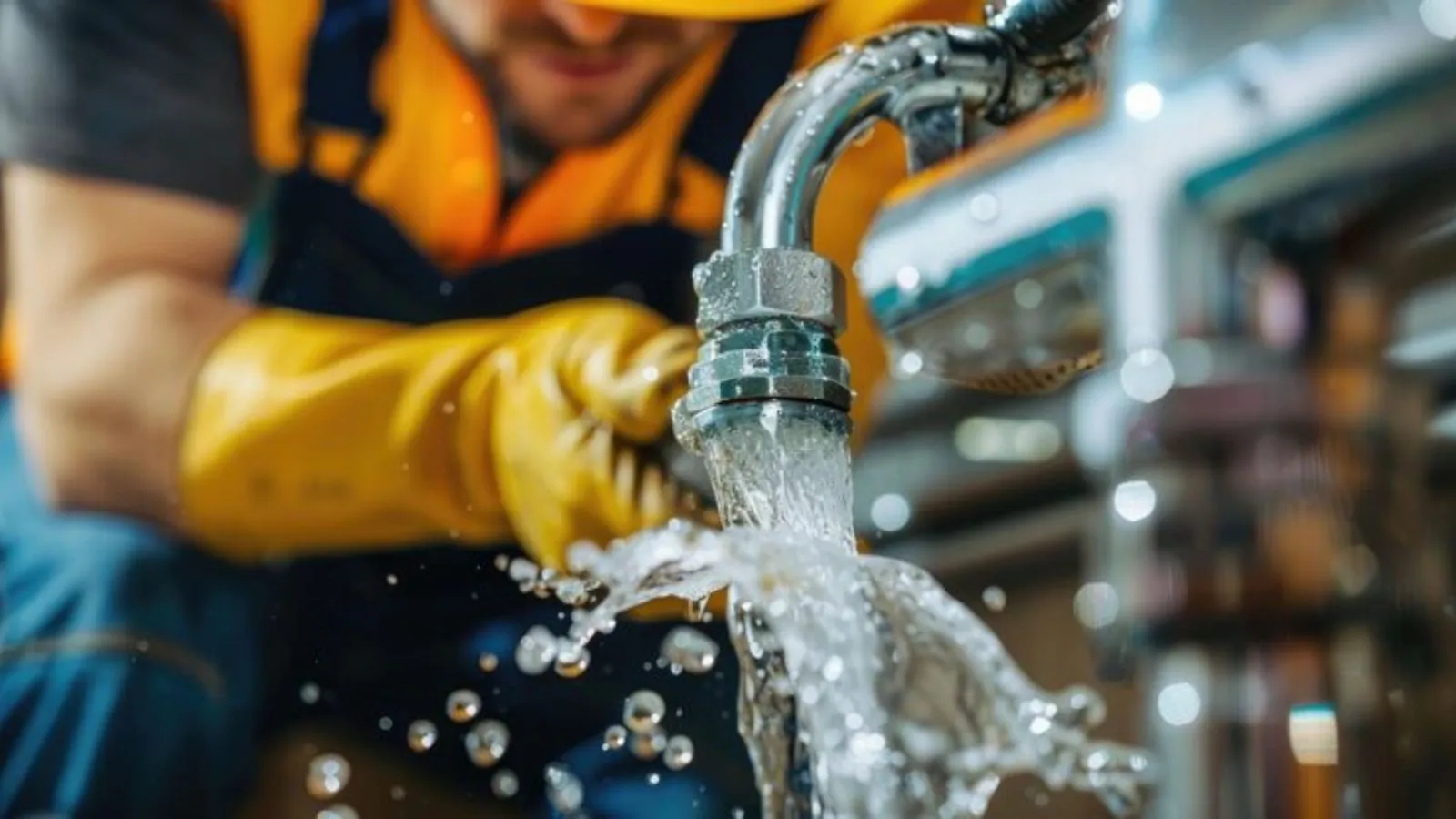
A frozen pipe that has thawed and started to leak is an emergency, and our Hempstead line is answered 24/7 for exactly that moment. Close the main water valve at once, open the faucet nearest the split to relieve pressure, and move belongings away from the wet area. Do not touch outlets or cords near the water.
Frozen pipe water damage in Hempstead, NY follows a pattern that surprises people. Ice expands, the pipe wall cracks or a joint opens, and nothing leaks while the ice holds. When temperatures rise or the heat comes back on, the ice melts and water pours through the opening.
When a thawed pipe is an emergency
Water that starts running from a ceiling, an outside wall or a basement joist shortly after a cold spell should be treated as a live leak.
- Find and close the main shutoff first.
- Do not use an open flame or a torch to thaw a pipe.
- If you smell gas or see sparks, leave the building and call 911 and the utility.
- Look in the places that stay coldest: exterior walls, garages, crawl spaces and unheated rooms.
Why pipes freeze where they do
Pipes freeze where cold air reaches them and warm air does not. Runs along exterior walls, water lines in an unheated garage or crawl space, and pipes in attic corners are the usual suspects. A supply line behind a kitchen sink on an outside wall is another.
We cannot give you a local count of how many freeze events happen in Hempstead each winter, and we would rather say so than guess. For current temperatures and freeze warnings, the National Weather Service forecast for Nassau County is the source to check. What matters for your property is whether any line runs through a space that loses heat.
| Frozen pipe that split | Pressurized burst pipe | |
|---|---|---|
| When water appears | After the ice melts | The moment the pipe fails |
| Typical location | Cold exterior walls, garages, crawl spaces | Anywhere along a supply line |
| Warning sign | Faucet runs slowly or not at all in cold weather | Sudden loud noise or spray |
| First step | Main shutoff, then call | Main shutoff, then call |
| Related page | Crawl space water damage | Burst pipe cleanup |
What happens after the thaw
Once the flow is stopped, the work is the same as any supply line loss. Water is extracted, wet insulation and drywall are checked with meters, and drying equipment runs until readings come down. The split section is replaced by a plumber, not by a restoration crew.
A pipe that froze inside a wall cavity often wets the stud bay from top to bottom. Insulation holds water like a sponge and slows drying, so it is commonly removed. Where an exterior wall is involved, a crew checks both sides of the cavity before closing it up.
Pipe thawed and leaking?
Shut the main valve and call the 24/7 line.
Cleanup in garages, crawl spaces and finished walls
A split pipe in a garage may only wet a concrete floor, which dries quickly. The same split above a finished ceiling can bring down drywall. A crawl space with a split line holds water under the house where nobody sees it, and crawl space cleanup is its own careful job.
Walls that were wet should be dried before they are repaired. Painting over damp drywall traps moisture and invites mold, so the wall and drywall repair comes last, once readings are normal.
What a frozen pipe job depends on
A caught-early thaw and an overnight leak are very different jobs, and pricing follows the damage found.
Time the leak ran
A leak noticed within minutes wets far less than one that ran while you were away.
Location of the split
A split in an open garage costs less to dry than one inside a finished wall.
Materials wet
Insulation and drywall are removed more often than solid framing.
Drying days
Dense, cold materials can dry slowly, which adds equipment days.
Rebuild scope
Drywall, paint and trim are estimated after drying is complete.
Sudden pipe failure from a freeze is often covered under a homeowners policy, but coverage depends on the policy terms, so check your policy or ask your insurer. Want your real number? Call (833) 521-1033.
Once a frozen pipe thaws and leaks, the ANSI/IICRC S500 standard guides the drying, and EPA guidance on drying within 24 to 48 hours applies from the moment the water is stopped.
Hempstead properties and cold exposure
Whether it is a house with a garage or a storefront on Fulton Avenue or Main Street with a rear storage room, the pipes in the unheated spaces are the first to check after a hard freeze.
If you rent in a multi-unit building, tell your landlord or property manager right away and report the leak in writing. Document the damage in your unit with photos, since your own policy and the landlord policy can both be relevant.
Frequently asked questions
Do you handle frozen pipe emergencies at night or on weekends in Hempstead?
Yes. The line is answered 24/7. A pipe often starts leaking in the middle of the night when the heat cycles back on, and that is when calls come in.
Is a frozen pipe covered by insurance?
Sudden damage from a freeze is often covered, but terms differ. Read your policy, call your insurer and keep photos and receipts. We do not state what a carrier will pay.
Should I thaw the pipe myself?
Only if the pipe has not split and you can do it safely. Warm air from a hair dryer is the usual approach. Never use an open flame, and shut off the main valve if you see any leak.
How do I know if a pipe split inside the wall?
Watch for a drop in water pressure, wet drywall, a bulge in paint or a stain that grows. Moisture meters and thermal imaging confirm what is wet.
How often do Hempstead pipes freeze?
We do not have a verified local figure. Check the National Weather Service forecast for cold snaps and focus on any pipe that runs through an unheated space.