
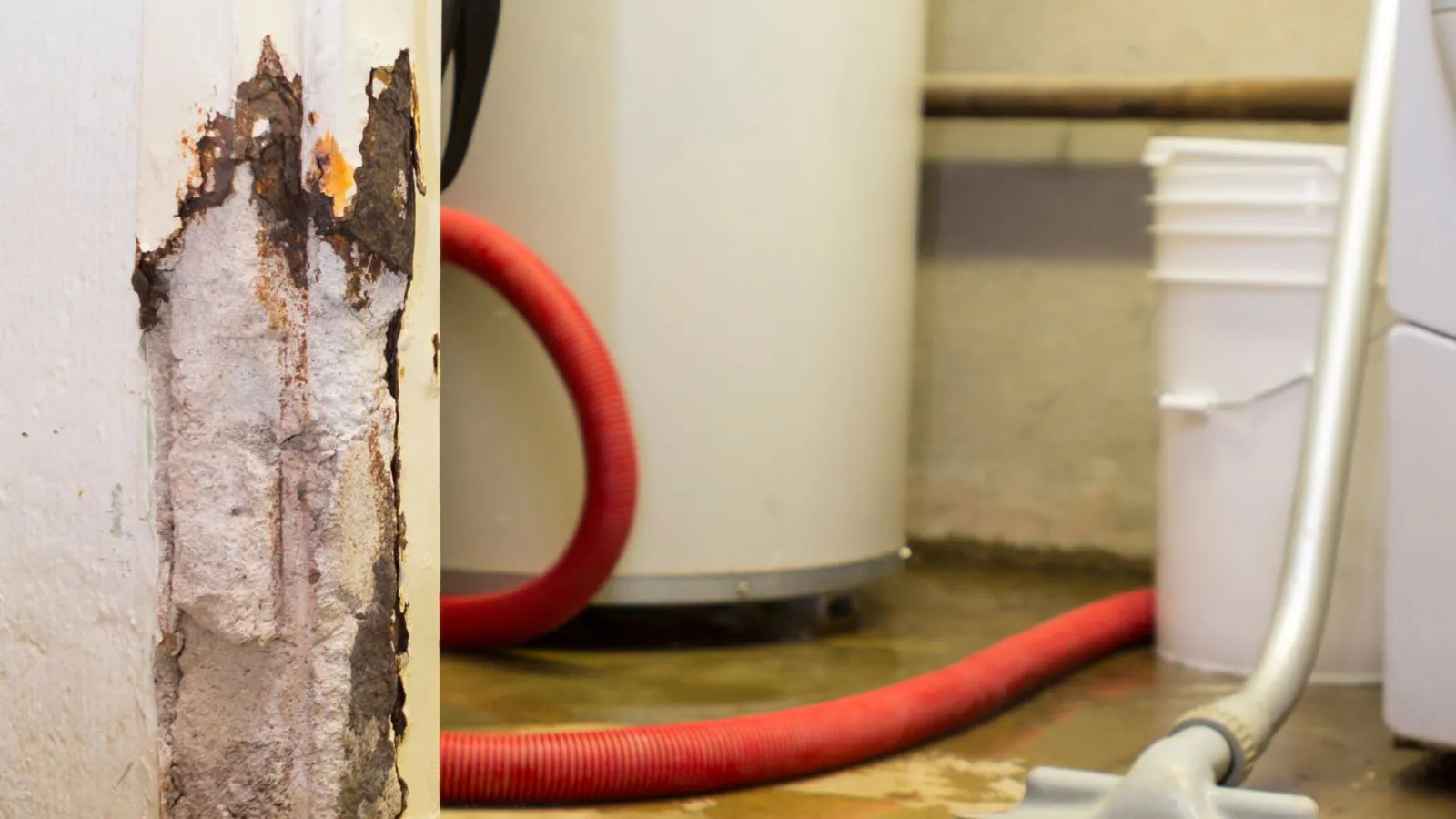
A water heater that has split is an emergency, and our Hempstead line is answered 24/7. Turn off the power to the unit at the switch or breaker if you can do so without stepping in water, or turn the gas control to off. Then close the cold water valve above the tank and keep everyone out of the water.
Water heater leak cleanup in Hempstead, NY deals with the water after the tank fails, whether the heater sits in a basement, a utility closet, a garage or an upstairs laundry room. The tank holds a large volume, and a bottom seam or fitting can release it quickly. A plumber replaces the heater. Our work is getting the water out and the building dry.
When a leaking water heater is an emergency
A water heater combines water with either electricity or gas. Both need respect before cleanup starts.
- Smell gas or rotten eggs? Leave the building and call 911 and the gas utility.
- Do not touch a wet electric heater or its wiring. Cut power only from a dry panel.
- Hot water can scald, so keep children and pets back from the pooled water.
- Photograph the tank label, the leak point and the water line before it is moved.
What leaking tank water does to a house
The water spreads outward from the tank in every direction and travels as far as the floor lets it. In a basement it reaches stored boxes and the base of walls. In an upstairs closet it drops through the floor into the ceiling below.
Drywall around the heater wicks water upward from the floor and holds it behind the paint. The base of a wall that looks dry can be soaked inside. A crew checks the wall and floor with moisture meters before deciding what comes out.
| Heater location | Typical damage | Cleanup focus |
|---|---|---|
| Basement or utility room | Stored items, drywall base, floor drains | Extraction, then basement drying |
| Garage | Concrete floor, stored goods, shared wall to the house | Extraction and wall checks |
| Upstairs closet or laundry room | Subfloor, ceiling below, nearby rooms | Extraction, then ceiling repair |
| Closet on a finished first floor | Hardwood or carpet beside the closet | See hardwood floors |
Drying and drywall repair after a tank burst
Once the water is out, drying starts with air movers and dehumidifiers placed to pull moisture from the wall base and floor. Insulation inside wet walls is commonly removed, since it holds water. Cutting the bottom of the drywall a few inches up lets air reach the cavity and speeds drying.
The repair follows drying. New drywall, baseboards and paint go in only after readings are normal. Callers often ask for the drying and the drywall repair as one job, and that is how we plan it, with one scope and one price explained before work starts.
Heater failed and water is spreading?
Close the supply valve and call the 24/7 line.
Questions we hear after a water heater failure
Is the heater itself the problem or is the leak coming from a fitting or the relief valve? A plumber answers that. Our crew answers a different question: how wet is the building and how far did the water go.
If the leak ran for days, a slow seep can look like a appliance leak and cause hidden moisture below the finish floor. Water standing for days raises the chance of mold, covered under mold remediation when it appears.
What a water heater leak cleanup depends on
A slow drip and a full tank release are different scopes, so the plan follows the readings.
Release volume
A full tank release wets more area than a seeping valve.
Location
Basements, garages and upstairs closets each need different handling.
Materials wet
Drywall base, insulation, subfloor and flooring change the work.
Drying days
Dense walls and closed closets slow drying and add equipment time.
Rebuild scope
Drywall, trim, paint and flooring are estimated after drying.
Sudden failure of a water heater is often covered by a homeowners policy, but a slow leak from age or neglect often is not, so check your policy or ask your insurer. Want your real number? Call (833) 521-1033.
After the tank is shut off and the source repaired, drying follows ANSI/IICRC S500, and the EPA guidance to dry wet materials within 24 to 48 hours applies to the closet, wall and floor around it.
Water heaters in Hempstead buildings
A heater can sit in a basement, a utility closet, a garage or an upstairs laundry room, and apartment buildings near Main Street and Fulton Avenue may have shared systems. If your building has a central system, the landlord or building manager decides who responds, so report the leak right away in writing.
Questions about replacing a heater or a gas line permit go to the Village of Hempstead Building Department. We clean up the water and do not do plumbing or gas work.
Frequently asked questions
Do you handle water heater leak emergencies at night or on weekends in Hempstead?
Yes. The line is answered 24/7. A tank can fail at any hour, and the sooner the water is removed, the less it travels.
Do you replace the water heater?
No. A licensed plumber replaces or repairs the heater. We remove the water, dry the structure and repair walls and floors.
Is the water safe to touch?
Water from a tank is usually Category 1, but it can be hot and may be in contact with electric wiring. Keep clear until power is off and a crew has looked at it.
How long does drying take after a tank failure?
Several days is common, depending on how many materials were wet. A crew takes readings each visit and tells you when the area is dry.
Will my floor need replacing?
Not always. Hard floors and subfloors can often be dried in place. Carpet pad and swollen particleboard are more likely to be replaced.