
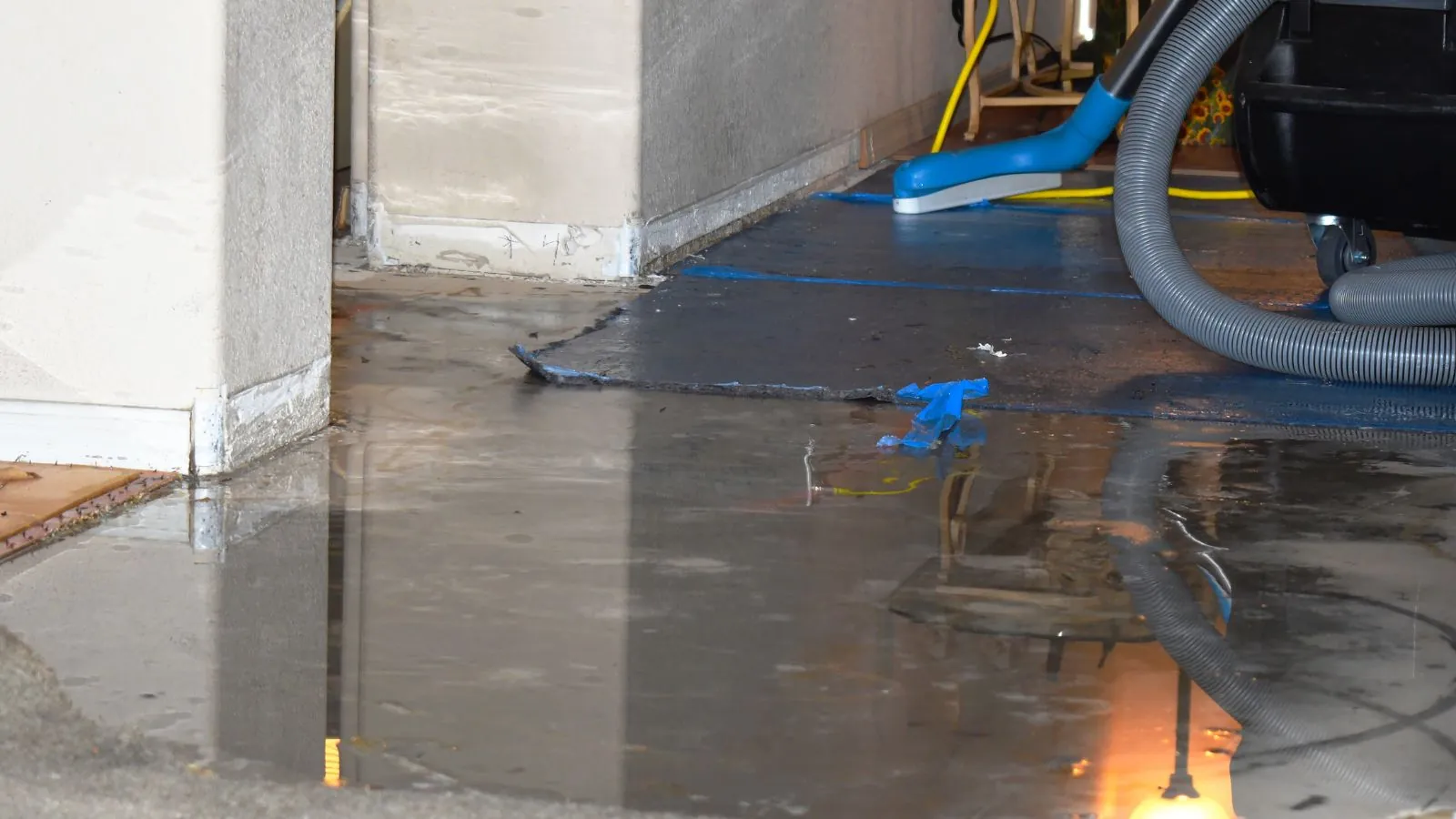
Standing water is an emergency because every hour it sits, it climbs into baseboards, wicks up drywall and soaks the pad under carpet. Our dispatch line in Hempstead answers 24/7, including nights and weekends. While you wait for a crew, stop the source if you can reach it safely, lift valuables and electronics onto tables, and keep children and pets out of the room.
Emergency water extraction in Hempstead, NY is the removal of standing water from a building using submersible pumps, portable extraction units and wands. It is the step that comes before drying, and it is the reason the later steps take days instead of weeks. The goal is simple: get the bulk water out before it is absorbed into the structure.
When standing water is an emergency
Water that touches outlets, a breaker panel or an appliance plug is an electrical hazard before it is a cleanup job. If you cannot reach the panel without stepping into water, do not try. Call your electric utility or 911 for any sparking, buzzing or burning smell, then call us.
- Shut off the main water valve only if the valve is dry and easy to reach.
- Do not use a household vacuum on standing water.
- Skip the bleach. Mixing cleaners in a wet, closed room is a separate hazard.
- Take photos and a short video of the water line before anything is moved.
How extraction is done
A crew starts by checking where the water came from and what kind of water it is. Clean supply water is handled differently from water that has crossed a floor, a yard or a drain. That call decides which materials can be saved and which need to come out.
Deep water is moved with submersible pumps and hose lines to a drain or outdoors. The last inch is where portable extraction units earn their place, because they pull water out of carpet, pad and floor cracks that a pump cannot reach. Hard floors are worked with squeegees and wet pickup wands.
| What you see | How it is removed | What usually follows |
|---|---|---|
| Water over the shoe line in a basement or laundry room | Submersible pump, then wands and extraction units | Moisture mapping and structural drying |
| Soaked carpet with a wet pad underneath | Weighted extraction units that pull from both layers | Pad removal, then carpet drying or replacement |
| Sheen of water across a hard floor | Wet pickup and squeegees, then floor drying | Checks under the boards, see hardwood floor repair |
| Water that smells like a drain | Treated as contaminated, with protective gear | See sewage backup cleanup first |
Laundry rooms, hallways and whole-house flooding
Callers describe the same few scenes. A laundry room an ankle deep after a washer hose let go. A bathroom leak that dropped a section of ceiling. A whole floor wet after a pipe failed while the family was out.
The extraction plan changes with the scene. A single room needs one crew and a short setup. A whole floor needs several pumps running at once, with a dry zone marked off so that foot traffic does not spread water into rooms that were spared.
Water still standing in the building?
Call the 24/7 line and say how deep it is and where it came from.
What extraction does not do
Pulling out the standing water does not make a building dry. Wood, drywall and insulation hold moisture long after the floor looks clear, and that trapped moisture is what feeds mold. Plan on moving straight into structural drying and dehumidification, with readings taken until the materials reach a normal level.
It also does not cover pumping a yard, a pool or a parking lot. Exterior water is a different service, and an honest answer on the phone saves you time. If the water entered through a cracked wall or a failed sump, the repair is a job for a waterproofing or plumbing trade, and our work covers the cleanup that follows.
What shapes the price of extraction
Every job is priced from what is found on site, and the scope and price are explained before work starts.
Water category
Clean, gray and contaminated water call for different gear and disposal steps.
Area and depth
More square feet and deeper water means more pumps and more hours.
Materials soaked
Carpet and pad, hardwood, drywall and insulation each need their own handling.
Drying days
Extraction is the short part. The drying that follows sets most of the schedule.
Rebuild scope
Anything that has to be removed and replaced is a separate line from the extraction.
Standard homeowners policies often cover sudden and accidental water but not gradual leaks, and flood damage usually needs separate flood coverage, so check your policy or ask your insurer. Want your real number? Call (833) 521-1033.
Extraction in Hempstead buildings
Hempstead mixes mid-century capes, colonials and ranches around the edges with older apartment buildings and storefronts near Main Street and Fulton Avenue. A flooded finished basement in a single-family home and a leaking unit above a shop on Main Street need different setups, so say which one you have when you call.
The Village runs its own potable water treatment plant and has an active plan to replace aged water and sewer mains in the downtown overlay zone, according to a 2024 state environmental notice. If water is coming from the street side of your meter, ask the Village which part of the line is theirs before you pay for a repair on it.
Frequently asked questions
Do you handle water extraction emergencies at night or on weekends in Hempstead?
Yes. The line is answered 24/7, including nights, weekends and holidays. Give the dispatcher your address, the depth of the water and what you think caused it, and a crew is arranged from there. No arrival time is promised on the phone, because it depends on the job and traffic.
Can I use a wet vac on the standing water myself?
A small amount on a hard floor is fine with a vacuum rated for wet pickup. A household vacuum is not, and any water near outlets or cords is a reason to stop and call. Pumps and extraction units move far more water and reach the pad under carpet.
How long does extraction take?
Removing standing water is usually a matter of hours for a single room and longer for a whole floor. Drying afterward takes days. A crew can give a clearer picture once the area and materials are seen.
Do you pump out yards, pools or driveways?
No. Exterior pumping is a different service. We remove water that is inside a building and handle the drying and repair that follow.
Will the water damage come back after extraction?
Not if the source is fixed and the materials are dried to a normal level. Extraction alone leaves moisture in the structure, which is why readings are taken during drying.