
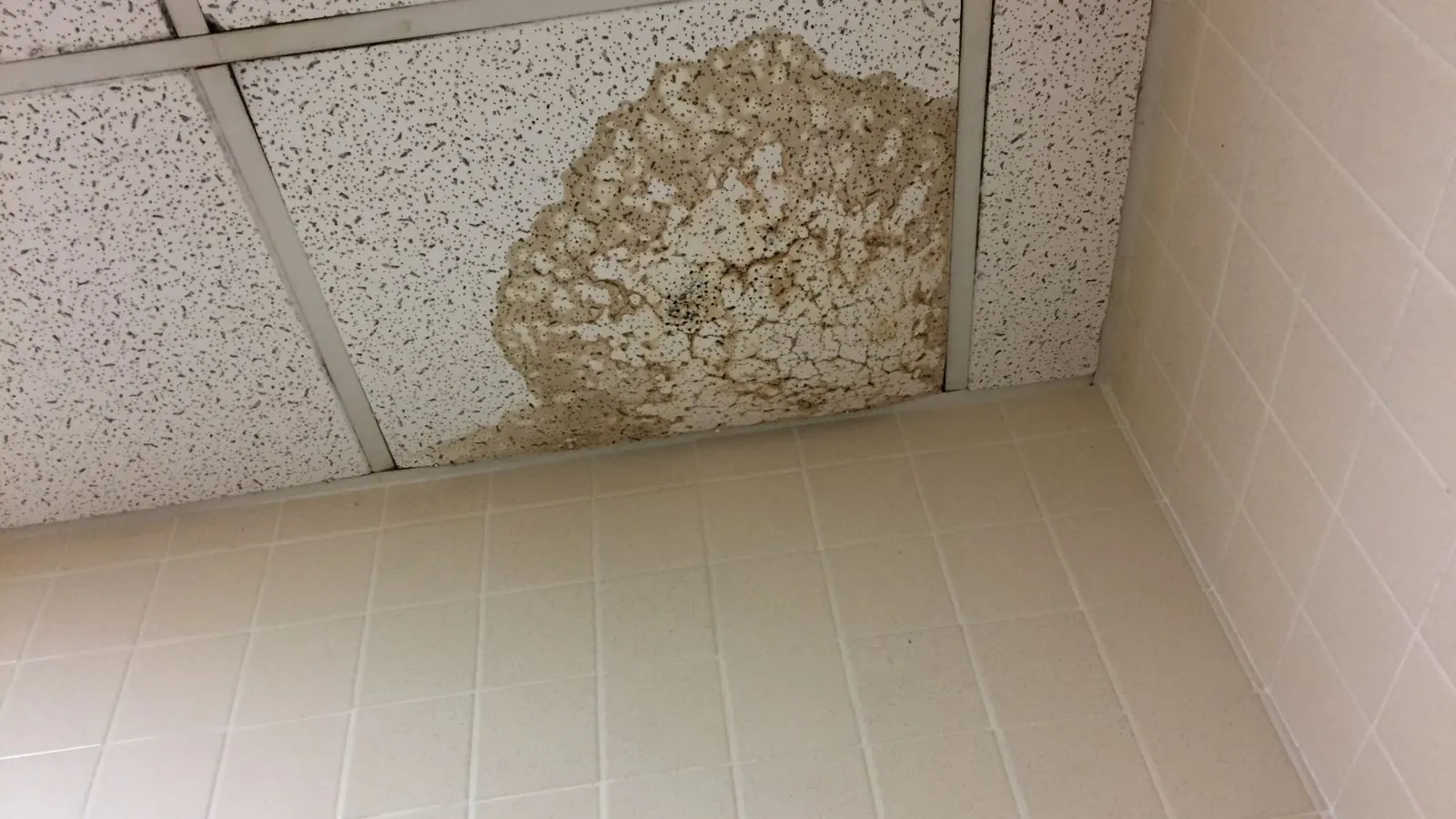
Wall and drywall water damage in Hempstead, NY often starts quietly with a stain, a soft spot or a baseboard that has begun to separate. If water is running down a wall, shut off its source and call our 24/7 line. Do not paint over a wet wall, and do not poke a hole unless you know it is safe.
Drywall is gypsum between sheets of paper, and both layers absorb water easily. A wall can look fine on one side while the cavity behind it is soaked. The job is to find the wet area, dry it and repair the surface once it is dry.
What wet drywall looks like
| Sign | What it suggests | What a crew checks |
|---|---|---|
| Stained or dark baseboards | Water at the floor level or wicking up | Moisture meter along the wall base |
| Bubbling or peeling paint | Moisture behind the paint | Thermal imaging, then a small inspection opening |
| Soft spot or crumbling board | Long-term wetting | Extent of damage across the wall |
| Water through an outlet or light | Water in the cavity near wiring | Call an electrician, power off from a dry panel |
| Water inside an exterior wall | Siding, flashing or window leak | Both sides of the wall and the exterior |
Callers describe a saturated wall in a kitchen, a soft spot forming in a bathroom wall and drywall in a garage that was wet from outside. Some mention siding that let water into a kitchen wall. Each calls for a source fix and then a repair.
Cutting, drying and rebuilding
The crew cuts the drywall back to dry material, usually a few inches above the highest wet reading. Flood cuts are used where water has risen from below. Wet insulation is removed and the studs are dried with air movers and dehumidifiers, sometimes with injection drying into the cavity.
New drywall is hung, taped, mudded, sanded and primed only after readings are normal. Skipping the drying phase is the usual reason for failed repairs. A repaired wall that was closed while damp can grow mold behind the new paint.
Wall wet or crumbling?
Call the 24/7 line and describe it.
Where the water came from
A wall is only the place the water ended up. Common sources include a burst pipe, a kitchen leak, a storm opening or a leaking appliance. Fixing the source comes first.
We pair with a plumber, roofer or siding contractor when a source needs repair. Our work is removing wet materials, drying the cavity and rebuilding the finish. If the damage reaches the ceiling, see ceiling repair for the overhead side.
Baseboards, trim and paint
Baseboards swell and stain when wet, and they are often replaced instead of saved. Trim and paint come last, and matching the existing paint can take two coats and sometimes a whole wall to hide the patch. Plan on a few days after drying for finish work.
What wall and drywall repair depends on
A single patch and a full room are different jobs. The plan follows the readings.
Wet area
Square footage of drywall removed sets labor and material.
Insulation and framing
Wet insulation is removed and framing is dried.
Source and duration
Long-term leaks harm more material.
Finish
Texture, paint and trim matching add time.
Drying days
Equipment time depends on materials and conditions.
Insurance often covers walls damaged by a sudden failure but not slow leaks, so check your policy or ask your insurer. Want your real number? Call (833) 521-1033.
Wall cavities are checked with a moisture meter before they are closed, following ANSI/IICRC S500 practice, because the EPA reminds homeowners that mold control depends on moisture control.
Walls in older and newer Hempstead buildings
Buildings in Hempstead range from early-1900s downtown structures to postwar houses, and wall construction differs between them. Older buildings may have plaster rather than drywall, which dries and repairs differently.
For repairs that involve structure or electrical work, ask the Village of Hempstead Building Department about permits. We do not state permit requirements from memory.
Frequently asked questions
Can I repaint a water-stained wall?
Only after it is dry. Painting over damp drywall traps moisture and the stain will return.
How much drywall has to come out?
It depends on readings. The cut is made to dry material, often a few inches above the highest wet reading.
Can drywall be dried instead of replaced?
Sometimes for clean water caught early. Soaked or contaminated drywall is usually replaced.
What if there is mold on the wall?
Stop and call. In New York, licensed professionals handle mold assessment and remediation, as covered on the mold page.
Do you repair plaster walls?
We dry them and can arrange repair. Plaster repair may involve a specialty contractor.