
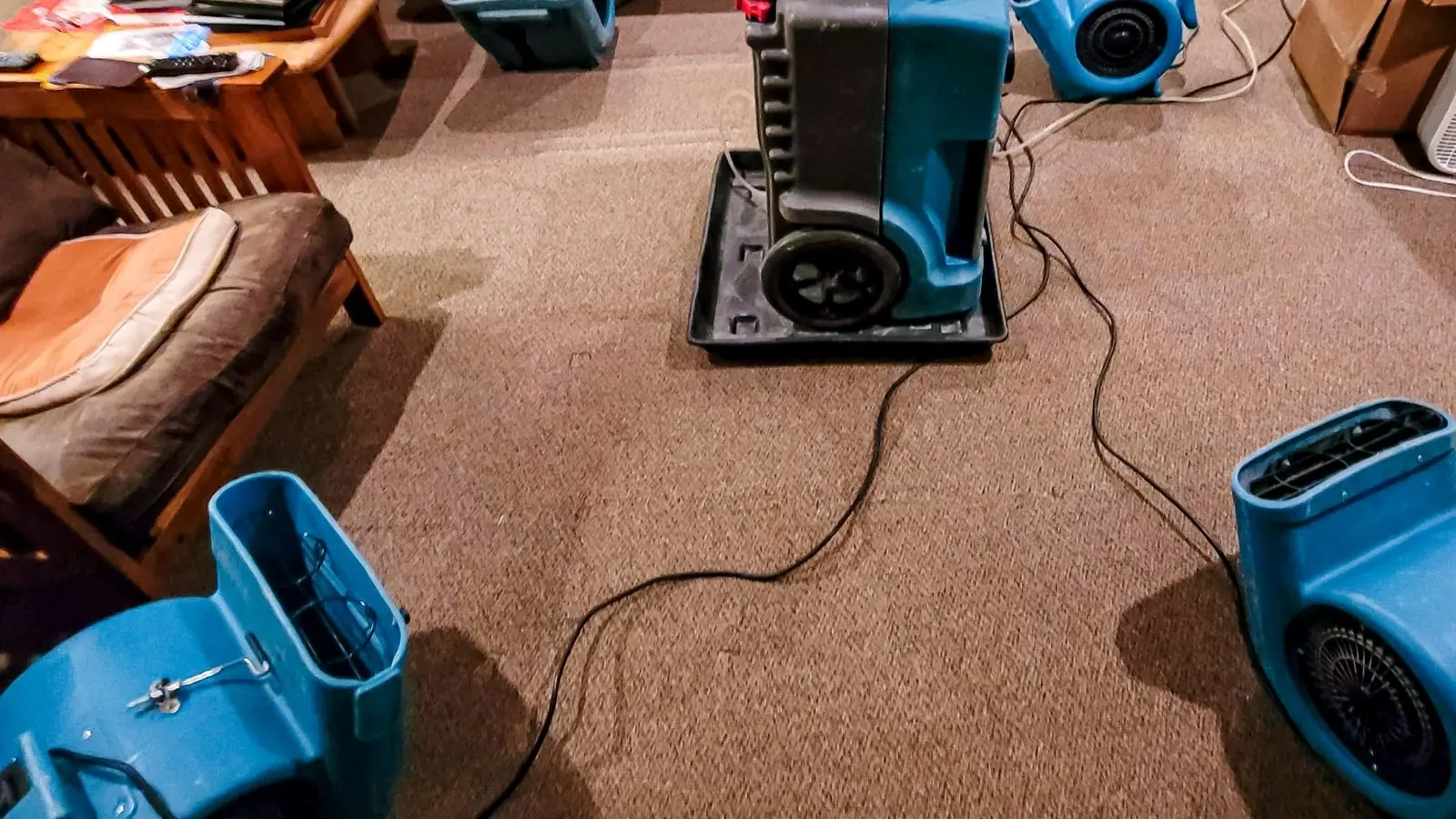
Structural drying in Hempstead, NY is the process of removing moisture that remains in a building after the water itself is gone. It uses moisture meters, thermal imaging, air movers and dehumidifiers, with readings repeated until materials return to a normal level. The line is answered 24/7 if you suspect a wet building.
My walls feel damp days after the cleanup. Why?
Water leaves a floor quickly, but it does not leave drywall, framing, subfloor or insulation on its own. Those materials hold moisture and release it slowly into the air, so a wall can feel cool or smell musty for days. If the moisture is not removed, it can feed mold and warp wood.
The trade name for the fix is structural drying and dehumidification. Callers often describe it with other words, such as drying out the house, getting the dampness out or running fans and dehumidifiers. All of them mean the same job.
Water mitigation: the first 24 to 72 hours
The industry uses the word mitigation for the steps that stop water from doing more harm. That means shutting off the source, extracting standing water and beginning drying quickly. EPA guidance says wet materials should be dried within 24 to 48 hours to limit mold growth, and that is the reason speed matters.
A crew sets a drying goal by checking dry reference readings in unaffected areas of the same building. Wet materials are measured against that reference. The goal is a return to normal, not a number from a chart.
| Equipment | What it does | Where it is placed |
|---|---|---|
| Moisture meter | Reads moisture in wood, drywall and concrete | On walls, floors and framing, at every visit |
| Thermal imaging camera | Shows temperature patterns that point to wet areas | Across ceilings and walls, as a screening tool |
| Air mover | Moves air across wet surfaces to speed evaporation | Aimed along walls and floors |
| LGR dehumidifier | Removes moisture from the air so surfaces keep drying | In the room, with doors and windows managed |
| Drying mat or injection system | Pulls moisture from under floors and inside wall cavities | Under hard floors and in cut wall bays |
Moisture mapping and drying time
Moisture mapping means measuring across the building and recording where readings are high. A crew marks the wet zones and repeats the readings each visit. It shows progress and makes it clear when equipment can be removed.
Drying time varies with materials, how long they were wet and the conditions in the building. Drywall and carpet dry faster than framing and concrete. A crew cannot honestly give an exact number of days until readings are taken, and you should be wary of anyone who does.
Not sure the building is dry?
Call the line and ask what readings should look like.
Equipment is used on the job, not rented
Callers sometimes ask to rent air movers and dehumidifiers. We use the equipment as part of a drying job and do not rent it out. Without readings, rented equipment tends to be turned off too early, and moisture stays in the building.
Drying follows water extraction and runs before any repair. For a pipe or appliance loss, the work is similar to the plan in burst pipe cleanup. Drywall is repaired only after readings are normal, and wall and drywall repair covers that step.
What structural drying depends on
Drying is priced by what the readings show, and scope and price are explained before work starts.
Affected area
More wet square footage needs more air movers and dehumidifiers.
Material type
Framing, concrete and insulation dry more slowly than drywall.
Water category
Contaminated water changes what can be dried in place.
Days of equipment
Equipment time is the largest driver of drying cost.
Access
Closed wall cavities and under-floor spaces need special setups.
Drying costs after a covered water loss may be part of a claim, but coverage depends on the cause and policy, so check your policy or ask your insurer. Want your real number? Call (833) 521-1033.
This page describes practice under ANSI/IICRC S500, the published standard for professional water damage restoration, and the EPA guidance to dry wet materials within 24 to 48 hours.
Drying in Hempstead buildings
In a village where apartments, storefronts and older houses sit side by side, drying often has to account for neighbors. A leak in one unit can send moisture into shared walls and ceilings, and equipment placement depends on what is wet in each unit. Tell every affected tenant and the property manager.
Questions about permits for wall or floor work after drying go to the Village of Hempstead Building Department.
Frequently asked questions
How long does structural drying take?
It depends on the materials, how long they were wet and the building. Readings guide the timeline. A crew cannot give an exact number until the area has been measured.
Do you rent air movers and dehumidifiers?
No. Equipment is used on the job as part of a drying plan and is not rented out.
Can I just run fans myself?
Fans alone often do not reach wall cavities or subfloors. Without readings you cannot tell if the structure is actually dry.
What does a moisture reading tell me?
It compares wet materials against dry reference readings in the same building. A normal reading means the material is dry enough to close up.
Will drying stop mold?
Drying removes the moisture that mold needs, which lowers the risk. It does not remove mold that has already grown.