
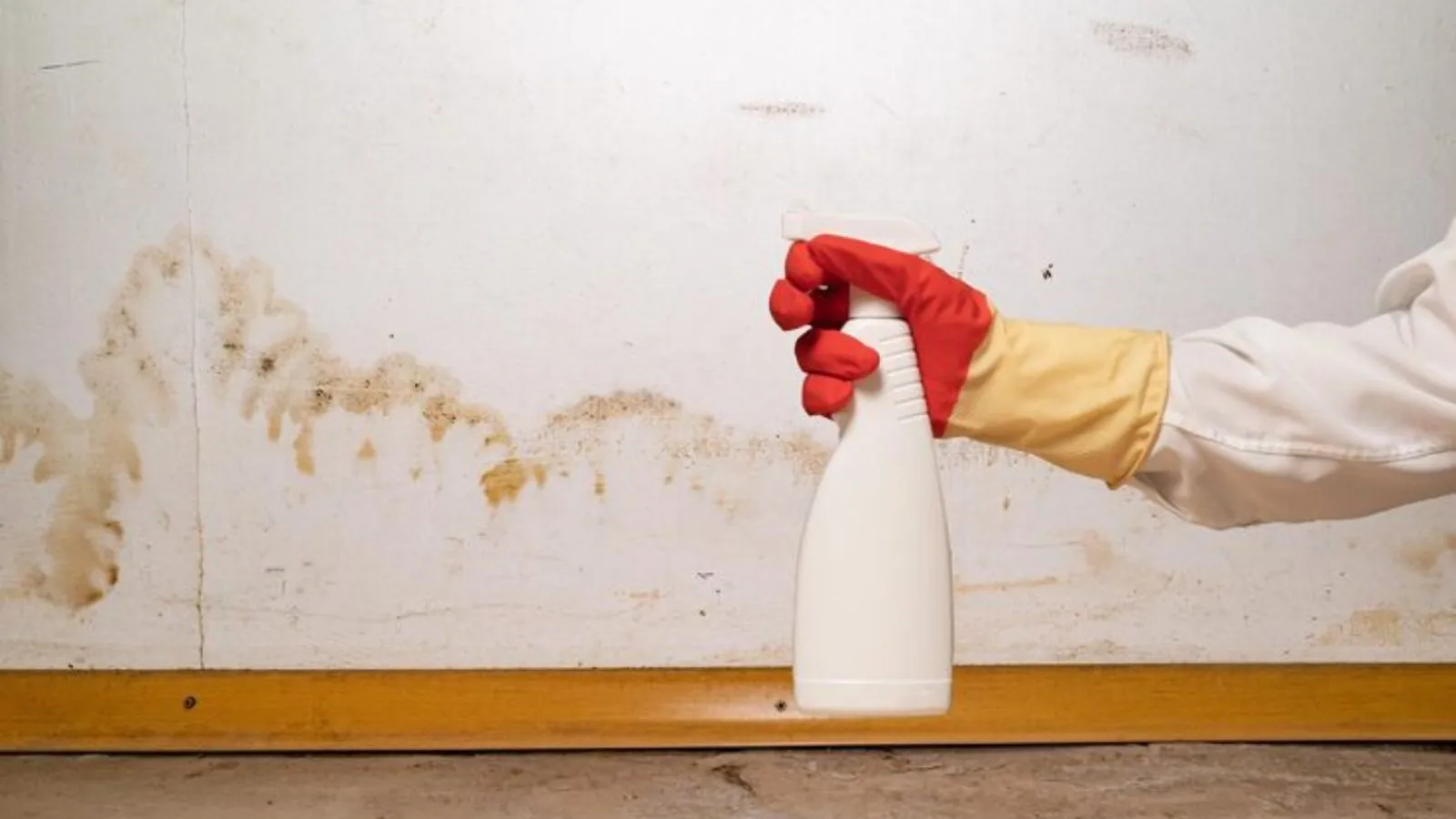
People searching for the cost of mold removal usually want one number. We will not give you a made-up one. Mold projects range from a small patch on a bathroom ceiling to growth inside walls after a long leak, and the price follows the work involved. What we can do is explain what drives the price so that any quote you receive makes sense.
This article describes general factors and New York rules at a high level. It is not a quote, a diagnosis or legal advice. For health questions about mold exposure, ask a physician. For the process on our side, see mold remediation in Hempstead.
New York rules shape who can do the work
New York regulates mold work under Article 32 of the Labor Law, and the Department of Labor licenses mold assessors and mold remediators. In general, the licensing rules apply to projects larger than 10 contiguous square feet of mold. For projects that size or bigger, the law also requires that the assessor and the remediator be separate and independent on the same project.
This separation affects both the process and the price, since there can be two parties and two sets of fees.
Smaller areas fall below that threshold, and EPA guidance says that in many cases a small moldy area of less than about 10 square feet can be handled by the homeowner. Even then, fixing the moisture source matters more than the cleanup. We recommend checking the current rules with the New York Department of Labor before you hire anyone.
The main factors in the price
What moves the price of a mold project
A fair quote can be explained line by line. These are the usual items.
Size of the affected area
More square footage means more containment, labor, materials and disposal.
Materials involved
Mold on a hard surface is handled differently from mold that has grown into drywall, insulation or carpet.
Access and location
Crawl spaces, attics and finished basements take more time and protection than open rooms.
Moisture source
The water problem must be fixed, otherwise growth can return after cleanup.
Containment and air handling
Barriers, negative air and filtration are used to keep disturbed spores from spreading.
Assessment and testing
A licensed assessor writes the plan, and clearance steps after remediation add time.
Rebuild scope
Replacing drywall, trim, paint and flooring after remediation is usually a separate estimate.
Want a real scope for your home? Call (833) 521-1033 and describe what you see.
Why the moisture source comes first
EPA states that the key to mold control is moisture control. If you clean up mold but do not fix the water problem, most likely the mold problem will come back. A restoration crew dries the structure and a plumber or roofer fixes the cause. That is why mold cost conversations usually start with a water question. See structural drying for how wet materials are dried and verified.
Mold after a leak?
Call the 24/7 line. We explain what can be done and what needs a licensed specialist.
Quote comparison without the guesswork
| Question | Why it matters |
|---|---|
| Is the assessor separate from the remediator? | New York requires independence on covered projects |
| What is the written scope and area? | Price should tie to square footage and materials |
| How will the area be contained? | Containment protects the rest of the home |
| Who fixes the moisture source? | Without that, growth can return |
| What does the quote leave out? | Rebuild work is often separate |
| How is completion confirmed? | Post-remediation checks should be described |
Be careful with a very low quote that does not name the area, the method or the licensing. Be careful, too, with a pitch built on fear. A reputable company explains the plan in plain terms and welcomes questions.
Does homeowners insurance pay for mold?
It depends on the policy and on the cause. Some policies limit or exclude mold, and some cover mold only when it results from a covered water loss, often up to a sub-limit. Ask your insurer about mold wording and sub-limits before work begins, and keep photos, moisture records and receipts. We do not decide coverage or promise what an insurer will pay.
What a homeowner can do to keep costs down
- Stop leaks and dry wet materials within 24 to 48 hours, as EPA guidance advises
- Keep indoor humidity under control and fix condensation issues
- Do not disturb a large moldy area or use bleach as a routine fix
- Photograph the area and record when the water problem started
- Get the scope in writing and ask what is and is not included
EPA notes that bleach is not recommended as a routine practice during mold cleanup, and that chlorine bleach must never be mixed with ammonia-containing cleaners because toxic fumes can result. If you are unsure whether growth is mold or something else, ask a licensed assessor.
What a clear mold quote should show
A useful written quote names the area in square feet, the materials affected, the containment method and the steps for removal and disposal. It says who writes the plan and who performs the work when New York rules require them to be separate. It also says what happens after remediation, such as how completion is checked, and it lists what is not included, such as new drywall or paint.
If a quote is a single lump sum with no breakdown, ask for one. A company that welcomes questions and writes things down is easier to compare. A company that dodges them is telling you something about how the job will go.
Professional mold practice references the ANSI/IICRC S520 standard, and the EPA publishes its own guidance on mold and moisture, both of which are worth reading before you compare quotes.
Mold questions in Hempstead homes
Mold shows up after leaks, storm water and condensation, and Hempstead has a mix of older houses, apartments and downtown buildings where water can travel unseen. A basement that stays damp or a closet that smells musty is worth a look.
We serve Hempstead and nearby Nassau towns, listed on the service area page. For buildings near Main Street and Fulton Avenue, see downtown Hempstead water damage. Because we do not publish dollar figures, the way to get your number is to call (833) 521-1033.
Frequently asked questions
How much does mold removal cost in Hempstead?
It depends on the area, materials, access, containment and rebuild scope. We do not publish a single number because no figure fits every home. Call for a scope.
Does New York require a license for mold removal?
For projects larger than 10 contiguous square feet, New York requires licensed mold assessors and remediators, and they must be independent of each other on the same project.
Can I remove mold myself?
EPA says small areas under about 10 square feet can often be handled by the homeowner, but fixing the moisture source is the most important step.
Does insurance cover mold removal?
It depends on your policy and the cause. Some policies limit mold coverage, so ask your insurer before work begins.
Do you handle mold after water damage in Hempstead?
We handle the water side and refer larger mold work to the right licensed professionals. Call the 24/7 line to describe what you see.