
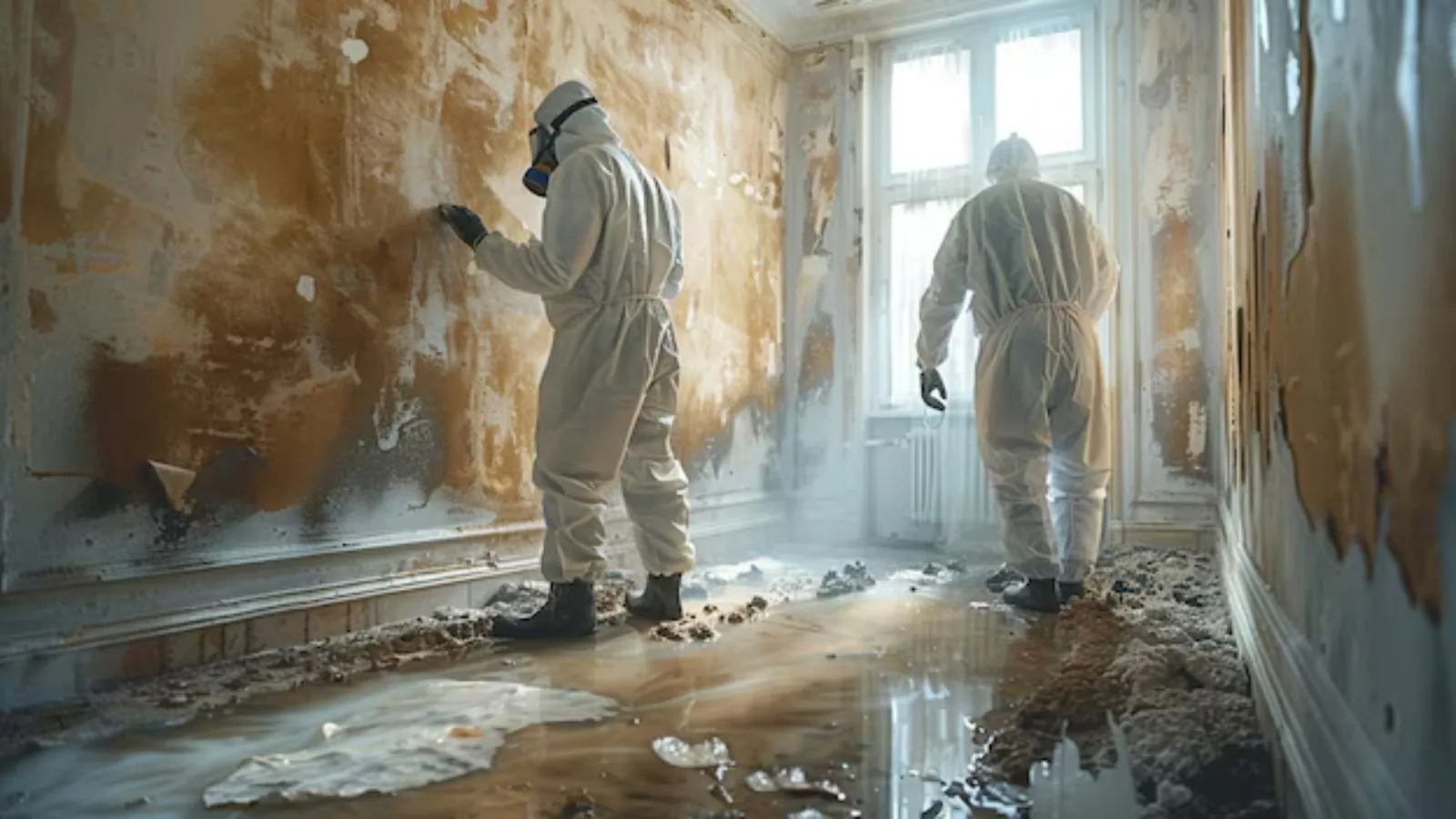
You dried the carpet, ran fans for a couple of days and the room looks fine. Yet the musty smell is still there, stronger on humid days. That is frustrating, and it is also informative. Odors come from something, and in a home that has had water, the most common source is material that is still damp or has stayed damp long enough to deteriorate.
This guide explains why odors linger and how to deal with them in a sensible order. It is general information and not a health assessment. For health concerns about odors or mold, ask a physician.
Why the smell lingers
Smells stay when moisture stays. EPA guidance says to dry water-damaged areas and items within 24 to 48 hours to prevent mold growth, and notes that if a building smells moldy but you cannot see the source, hidden mold may be present. Moisture can remain in places surface drying does not reach.
- Carpet pad or underlayment that was never fully dried or replaced
- Wall cavities, insulation and the back side of drywall
- Subfloor and framing under hard flooring
- Baseboards, trim and cabinet kick plates
- Furniture, boxes and fabrics that stayed damp
- HVAC ducts and drain pans that picked up moisture
Odor from sewage or floodwater is a separate matter. Those events involve contaminated water, and cleanup follows stricter steps, see sewage backup cleanup.
Still smells after drying?
Call the 24/7 line. We take moisture readings to find what is still wet.
Step 1: find the moisture
Start by sniffing your way to the strongest spot. Then check it with more than your nose. A moisture meter reads materials. A thermal camera can show temperature patterns that suggest hidden moisture. A simple humidity gauge tells you if the room air stays damp. Check closets, under sinks, behind furniture on exterior walls and around the base of the walls.
Step 2: dry what is still wet
Once found, wet materials have to be dried or removed. Air movers push air across surfaces, and dehumidifiers pull moisture from the air. Carpet pad that has soaked through is usually replaced, see carpet water damage restoration. Drywall that wicked up high may need to be opened so the cavity dries. A crew drives toward normal readings and checks again, as described under structural drying.
Step 3: remove what cannot be saved
Some materials hold odors even after drying. Soaked insulation, old pad and swollen particleboard are frequent examples. Replacing them is often faster and more reliable than trying to deodorize them. If it is a larger problem or you see growth, read mold remediation in Hempstead, because New York licensing rules generally apply to mold projects over 10 contiguous square feet.
Step 4: clean surfaces and improve airflow
| Step | Why | Notes |
|---|---|---|
| Wash hard surfaces with detergent and water | Removes residue that holds odor | Rinse and dry fully |
| Launder or discard soft items | Fabrics hold moisture and smell | Photograph discards for insurance records |
| Increase ventilation and run a dehumidifier | Lowers humidity so odor sources dry out | Empty and clean the unit regularly |
| Replace HVAC filters | Filters can hold odor and dust | Ask a technician about ducts and drain pans |
| Avoid mixing bleach with ammonia products | Toxic fumes can result, per EPA | EPA does not recommend bleach as routine mold cleanup |
| Do not spray fragrance over damp areas | Covers the smell without fixing the cause | The odor returns |
Odor products can have a place after the source is fixed. Used too early, they cover a problem that is still growing. A smell that fades for a day and returns is a sign that moisture remains.
When to bring in help
- The smell is strong and you cannot find the source.
- Wall, ceiling or floor materials read wet or feel soft.
- You see dark spots or growth larger than about 10 square feet.
- The water was sewage or floodwater.
- The smell returns each time humidity rises.
We can take readings, dry the structure and tell you which items should be replaced. We do not make health claims about odors, and we point you to the right licensed steps for regulated mold work.
Odors by source
| Odor | Often points to | Next step |
|---|---|---|
| Earthy, damp basement smell | Seepage or high humidity below grade | Check walls, floor edges and the sump, then dry and dehumidify |
| Sour, stale smell in carpet | Wet pad or backing that stayed damp | Check the pad with a meter and replace if soaked |
| Musty smell near an exterior wall | Moisture in the wall cavity or insulation | Take moisture readings and open the wall if needed |
| Smell that rises when the AC runs | Wet ducts or a clogged condensate line | Have the system checked, see AC leak water damage |
| Sewer smell | A drain or trap problem, or a backup | Call a plumber, see sewage backup cleanup |
These are general patterns, not diagnoses. Several can overlap, and a crew checks readings before deciding where to open a wall or lift a floor. Never assume the smell is harmless just because the area looks dry on the surface.
How long it takes for a smell to fade
If the source is found and the material is dried or removed, odor often fades over days as the building dries and the air moves. If it does not, something is still damp, or a porous material is holding the smell. Repeat readings tell you which. Patience helps, but a smell that is unchanged after a week of proper drying is a reason to look again.
The EPA publishes a brief guide to mold, moisture and your home, and the ANSI/IICRC S500 standard covers how professionals dry structures, so both are good references if the smell persists.
Why Hempstead homes can hold odors
Hempstead has older houses with basements and crawl spaces, apartments with shared walls and newer buildings with tightly sealed envelopes. Each can trap damp air in different places. A closet on an exterior wall, a finished basement corner or a bathroom without a good fan is a common spot.
If your home is below grade, basement water damage cleanup explains how those rooms are dried. The service area page lists nearby towns we serve, and downtown Hempstead covers shared-wall buildings.
Frequently asked questions
Why does my house still smell musty after drying?
Some moisture is probably still present, often in padding, wall cavities, subfloors or trim. Moisture readings help find it.
Will an air freshener fix a musty smell?
Not by itself. It covers the odor while the cause remains. Find and dry the moisture first.
Do I need to replace carpet pad for the smell?
Often yes if it soaked through. Pad holds water and odor, and replacement is common.
Is a musty smell the same as mold?
Not always, but it can signal hidden moisture. EPA says a moldy smell with no visible source can mean hidden mold.
Can you find the source of a musty smell in Hempstead?
Yes. We take moisture readings and explain what is wet and what to dry or replace. Call the 24/7 line.