
You do not need special equipment to start. Most homeowners learn about mold because they see something or smell something, and most of the time the clue points back to moisture. This guide walks through the places and signs to check, and what to do when a clue turns up. It is general information, not a diagnosis, and it does not address health effects, which are a matter for a physician.
EPA states that the key to mold control is moisture control, so the questions to ask are always about water. Where has it been, how long and was it dried within 24 to 48 hours. The answers shape everything else.
Clue 1: you can see it
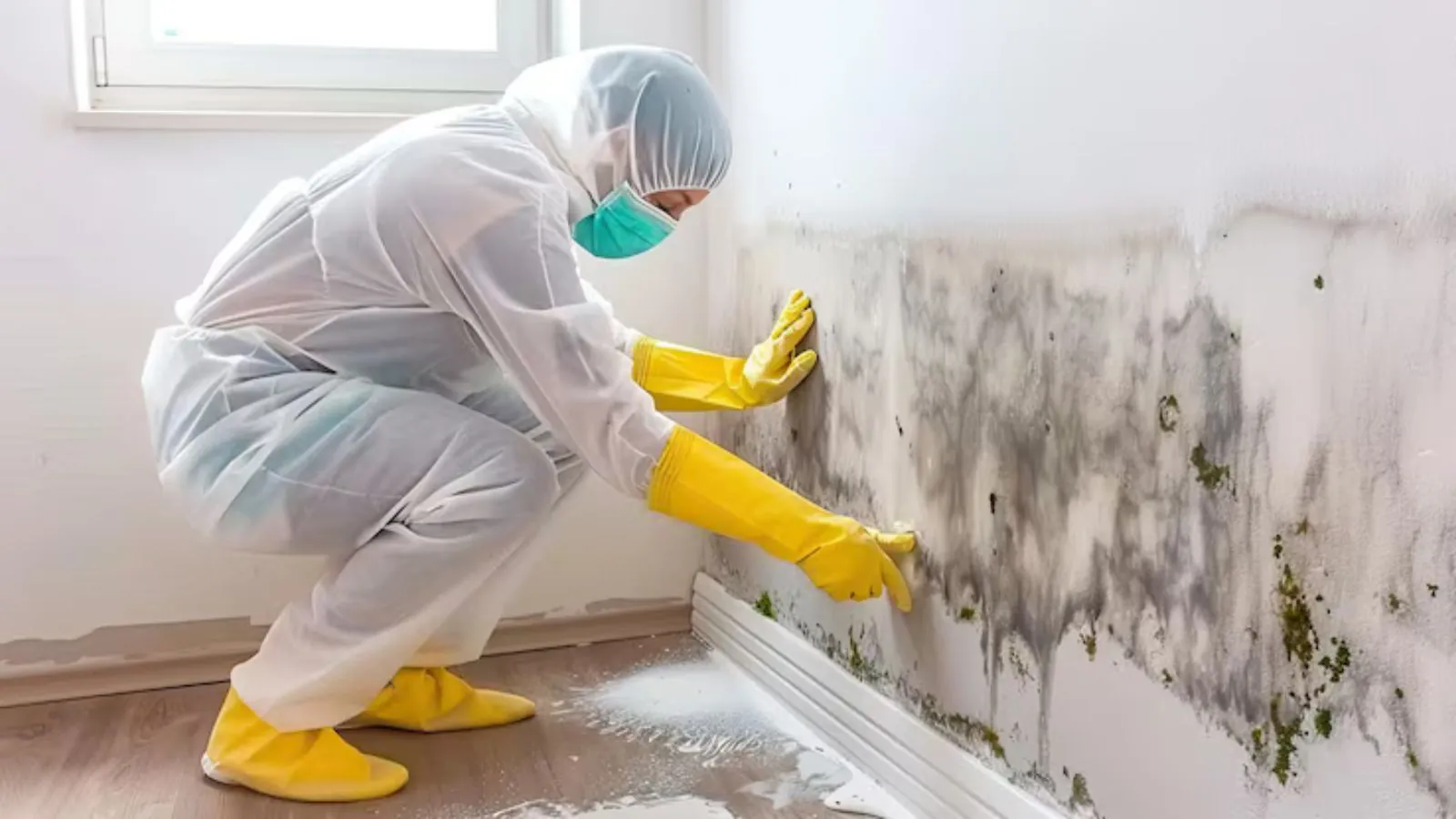
Visible growth appears as spots, patches or fuzzy and powdery surfaces. Colors vary widely, and color alone does not tell you what it is. Common places are the corners of ceilings, the edges of bathroom tile and tub caulk, the backs of closets on exterior walls, window sills with condensation, the underside of sink cabinets and basement walls near the floor.
Be careful not to confuse mold with other things. Dirt, soot, dust and mineral deposits can look similar. A damp cloth sometimes helps you tell surface dirt from growth, but if you are unsure, leave it undisturbed and ask a professional rather than scrubbing hard.
Clue 2: you can smell it
A musty or earthy odor that comes and goes is a classic clue. It may be stronger when the house is closed up, after rain or when the humidifier or AC runs. EPA says you may suspect hidden mold if a building smells moldy but you cannot see the source. The smell tells you to look for moisture behind surfaces.
Smell but no source?
Call the 24/7 line. A crew can read moisture in walls, floors and ceilings to find hidden wet spots.
Clue 3: there has been water
The strongest clue is a history. Think back over the last year or two. A pipe that was repaired, a washer that overflowed, a roof leak, a basement that took water after a storm or a carpet that was wet for more than a day all raise the chance that growth started. If wet materials were not dried within 24 to 48 hours, check them.
| Past event | Where growth may hide | Related page |
|---|---|---|
| Plumbing leak behind a wall | Drywall back side, insulation, baseboards | Burst pipe damage |
| Roof or ceiling leak | Ceiling drywall, attic insulation, wall tops | Ceiling water damage |
| Basement water after rain | Wall bases, stored boxes, carpet | Basement water damage |
| Appliance leak | Behind washers, under dishwashers, cabinet floors | Appliance leaks |
| Wet carpet and pad | Pad, tack strips, subfloor | Carpet water damage |
Clue 4: the humidity stays high
Mold needs sustained moisture. A hygrometer, which is an inexpensive humidity gauge, can show whether a room stays damp. EPA guidance on moisture recommends keeping indoor humidity low, and a consistently high reading in a basement or bathroom is worth acting on. Fog on windows, damp towels that never dry and a bathroom with no working fan are common hints.
What to do when you find a clue
- Photograph the area with a date and do not disturb it.
- Look for the water source and stop it if you can do so safely.
- Dry wet materials and improve air movement and ventilation.
- Measure the area. About 10 square feet is a key threshold.
- Call a professional if it is larger, hidden or tied to sewage or floodwater.
EPA says small moldy areas under about 10 square feet can often be handled by the homeowner, and larger problems call for more help. In New York, mold assessment and remediation licensing rules generally apply to projects larger than 10 contiguous square feet, and the assessor and remediator must be independent. See mold remediation in Hempstead for how that works.
What not to do
- Do not sweep, vacuum or sand dry growth, which can spread material around the home
- Do not mix chlorine bleach with ammonia-containing cleaners
- Do not paint over growth, since moisture will push through again
- Do not ignore a smell just because you cannot see a cause
- Do not assume a test kit alone settles the question
Home test kits and quick sampling can be hard to interpret. A licensed assessor decides whether sampling is useful and how to read the results. Mold spores are present in outdoor and indoor air, so a kit finding spores does not by itself say whether you have a problem.
A simple room-by-room walk
Walk through the house with a flashlight on a day when the heating or air conditioning has been running normally. In the basement, check wall bases and stored items. In bathrooms, check ceilings, grout and the wall behind the toilet. In bedrooms and closets, check exterior walls and the backs of furniture. In the kitchen, open the cabinet under the sink. In the attic, look at the underside of the roof deck. Photograph anything suspicious with a date.
If a spot wipes away with a damp cloth and does not return after the area dries, it was probably surface dirt or condensation residue. If it returns or the material underneath is soft or stained, moisture is the real issue.
The EPA brief guide to mold, moisture and your home explains the 24 to 48 hour drying window and the 10 square foot rule of thumb, and ANSI/IICRC S520 is the reference for professional mold work.
Checking a Hempstead house or apartment
In Hempstead, the older buildings and the mix of basements, crawl spaces and attached units give moisture many places to hide. After a storm or a plumbing event, a short walk through the basement and bathroom ceilings can catch trouble early. Renters should report signs to the landlord in writing.
We serve the nearby towns listed on the service area page. For shared-wall buildings near Main Street and Fulton Avenue, read downtown Hempstead water damage.
If your checks turn up wet readings, we can help with drying and repair. If they turn up a larger area of growth, we point you to the right licensed steps.
Frequently asked questions
What are the signs of mold in a house?
Visible spots or fuzzy patches, a musty odor, a history of leaks and persistently high humidity are common signs.
Can mold be hidden behind walls?
Yes. A moldy smell with no visible source can mean growth in a wall cavity or under flooring. Moisture readings help find it.
Should I buy a mold test kit?
Kits can be hard to interpret because spores are present in normal air. A licensed assessor decides whether sampling is useful.
How big is too big to handle myself?
EPA says about 10 square feet is a rough threshold, and New York licensing rules generally apply above 10 contiguous square feet.
Can you check for hidden moisture in Hempstead homes?
Yes. We take moisture readings and explain the findings and scope before work starts. Call the 24/7 line.