
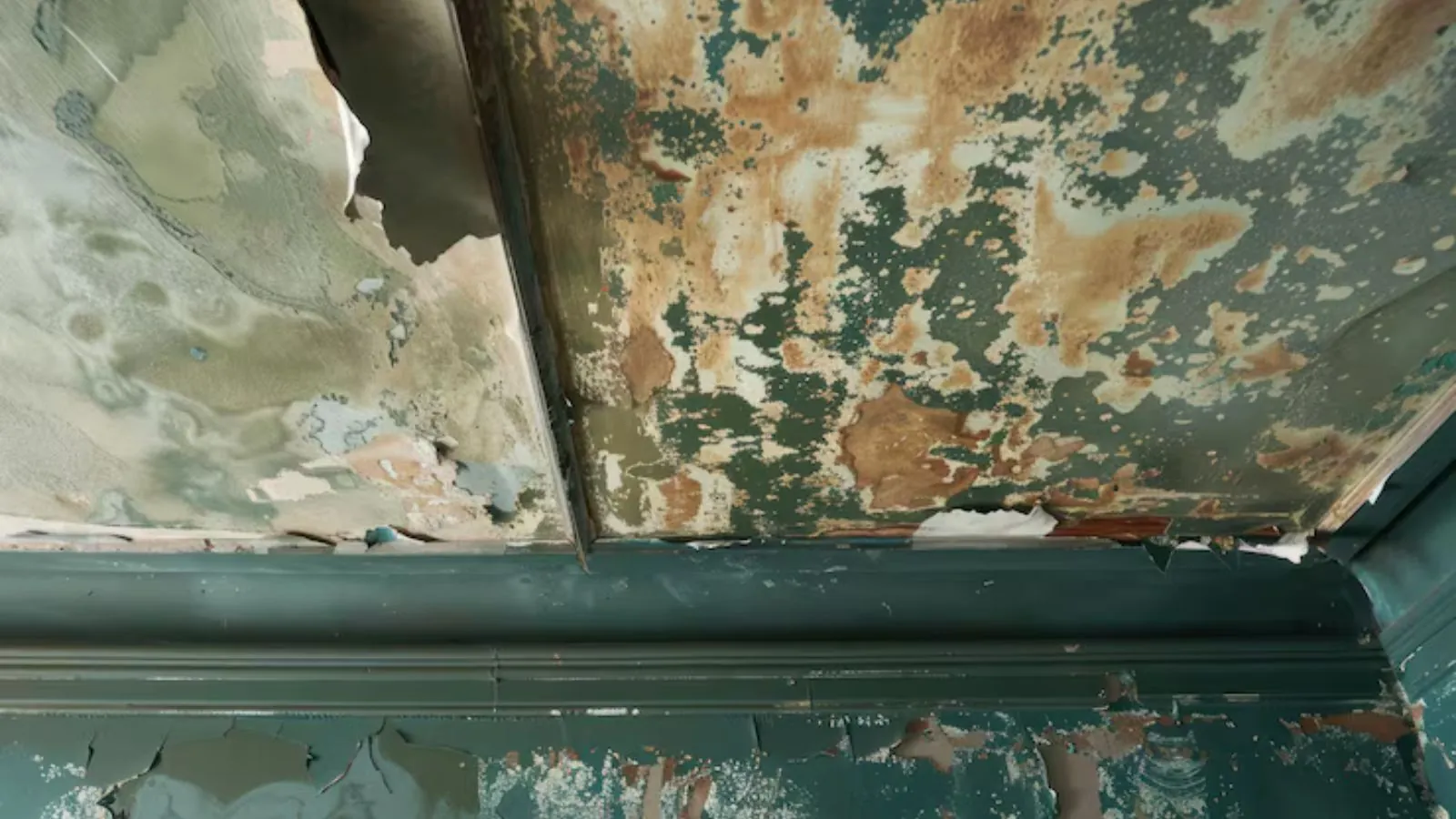
Water damage often starts out of sight. A supply line weeps inside a wall, a roof flashing lets in a little rain or a washer hose drips behind a cabinet. By the time you see something, the water may have been moving for days. Knowing the signs helps you act while the repair is still small.
No sign proves a leak on its own, and many have harmless causes. The list below is meant to help you decide when to look closer and when to call a professional. EPA guidance on moisture says the key to mold control is moisture control, which is why finding wet materials early matters.
Signs you can see
Stains on ceilings and walls
Yellow, tan or brown rings that grow after rain or after a bathroom is used. A stain with a darker edge often means water has returned more than once.
Bubbling or peeling paint
Paint that blisters, flakes or lifts in a patch can mean moisture is moving through the wall from behind.
Warped or cupped floors
Boards that curl at the edges, buckle or lift from the subfloor are often responding to moisture from below or from a past flood.
Sagging drywall or ceiling
A bulge or sag can mean water is pooled behind the surface. Do not poke it from under, since it may release water suddenly.
Rust, stains or mineral deposits
Rusty fasteners, white crusty salts on masonry or discolored baseboards often show repeated moisture.
Visible mold or dark spots
Black, green or gray growth on a surface, a ceiling corner or the back of a cabinet often follows days of dampness.
Signs you can smell or hear
A musty odor in a closet, basement or under a sink is a clue that something is damp even when nothing looks wet. EPA says you may suspect hidden mold if a building smells moldy but you cannot see the source. Sounds matter too. Running water when nothing is on, a hissing line or dripping inside a wall can point to a pressurized leak.
Signs in your bills and fixtures
- A water bill that rises without a change in use, which can mean a hidden leak or a running toilet
- A water meter that keeps moving when every fixture is off
- Low water pressure or discolored water from a tap
- A water heater that leaks at the base or has damp ground around it
- A sump pit or floor drain that stays wet or smells
A quick meter test helps. Turn off every fixture and appliance, note the meter reading, wait an hour without using water and check again. A change suggests water is escaping somewhere. A plumber finds the leak, and a restoration crew deals with the damage it caused.
Seeing a stain that keeps growing?
Call the 24/7 line. A crew can read moisture in the wall and explain the next step.
Where water damage hides in homes
| Place | Typical source | What to look for |
|---|---|---|
| Under sinks and behind vanities | Supply lines, drain traps | Swollen cabinet floors, dark stains, odor |
| Behind washers and dishwashers | Hoses, valves, drain lines | Warped flooring, damp baseboards, see appliance leaks |
| Ceilings below bathrooms | Tub, shower and toilet seals | Rings, bubbling paint, ceiling water damage |
| Basement walls and floor edges | Seepage, window wells, plumbing | White deposits, damp corners, see basement water damage |
| Attic and roof edges | Flashing, vents, ice dams | Dark roof sheathing, damp insulation |
| Near water heaters and AC units | Tanks, condensate lines | Rust at the base, pooled water, see water heater leaks |
How fast signs turn into bigger problems
Materials that stay wet change over time. Drywall softens, wood swells and fasteners rust. EPA guidance says it is important to dry water-damaged areas and items within 24 to 48 hours to prevent mold growth. That is a short window, which is why a small stain after a storm deserves a look rather than a wait-and-see approach.
If you find signs and are unsure whether they are old or new, a moisture reading tells the difference. Old stains on dry material are cosmetic. A stain that reads wet means water is still present.
What to do when you spot the signs
- Find and stop the source if you can do so safely.
- Photograph the stain, floor or wall with a date.
- Dry small spills quickly and keep fans moving air across the area.
- Do not cut into walls near wiring or heavy ceiling bulges.
- Call a professional for moisture mapping if the area is larger than a small patch or you cannot find the source.
Signs that appear after a storm or a known event
After heavy rain, check the basement walls and floor edges within a day or two, and look at ceilings under the roof. After a plumbing repair, check the wall around it, since a patched pipe can leave wet insulation behind. After a washer or dishwasher overflow, check the floor next to the appliance and the room below. Events leave a trail, and checking at the right time catches it.
If you cannot tell whether a mark is new, take a dated photo and look again in a week. A stain that grows or darkens is active. Keep the photos, because they also help if you ever need to show an insurer or landlord when you first noticed the problem. See basement water damage cleanup if the signs are below grade.
The ANSI/IICRC S500 standard treats moisture readings as the basis for any drying plan, so a reading beats a guess whenever you are unsure whether a stain is still wet.
What we see in Hempstead buildings
Older Hempstead buildings can have aging plumbing, plaster walls and long-standing patches that hide earlier leaks. Newer buildings can hide moisture behind sealed drywall. In either case, the sign is usually the same, a stain, a smell or a surface that feels different.
For nearby places we cover, see the service area page. For shops and apartments around Main Street, see downtown Hempstead.
When in doubt, ask for a reading. It is quick, it gives you a number to work with and it keeps a small problem from turning into a large one.
Frequently asked questions
What are the first signs of water damage?
Stains, peeling paint, musty odors, warped flooring and a rising water bill are common early signs.
Can water damage be hidden inside a wall?
Yes. A leak can run for days behind drywall. Odors, stains and moisture readings help find it.
How do I know if a stain is old or new?
A moisture meter tells you. Dry stains are usually old, and a wet reading means water is still present.
Do I need to call someone for a small ceiling stain?
If the source is known and fixed and the area reads dry, it may only need repair. If you do not know the source, ask for a reading.
Do you check for water damage in Hempstead homes?
Yes. Call the 24/7 line, describe the signs and a crew explains the scope and price before work starts.