
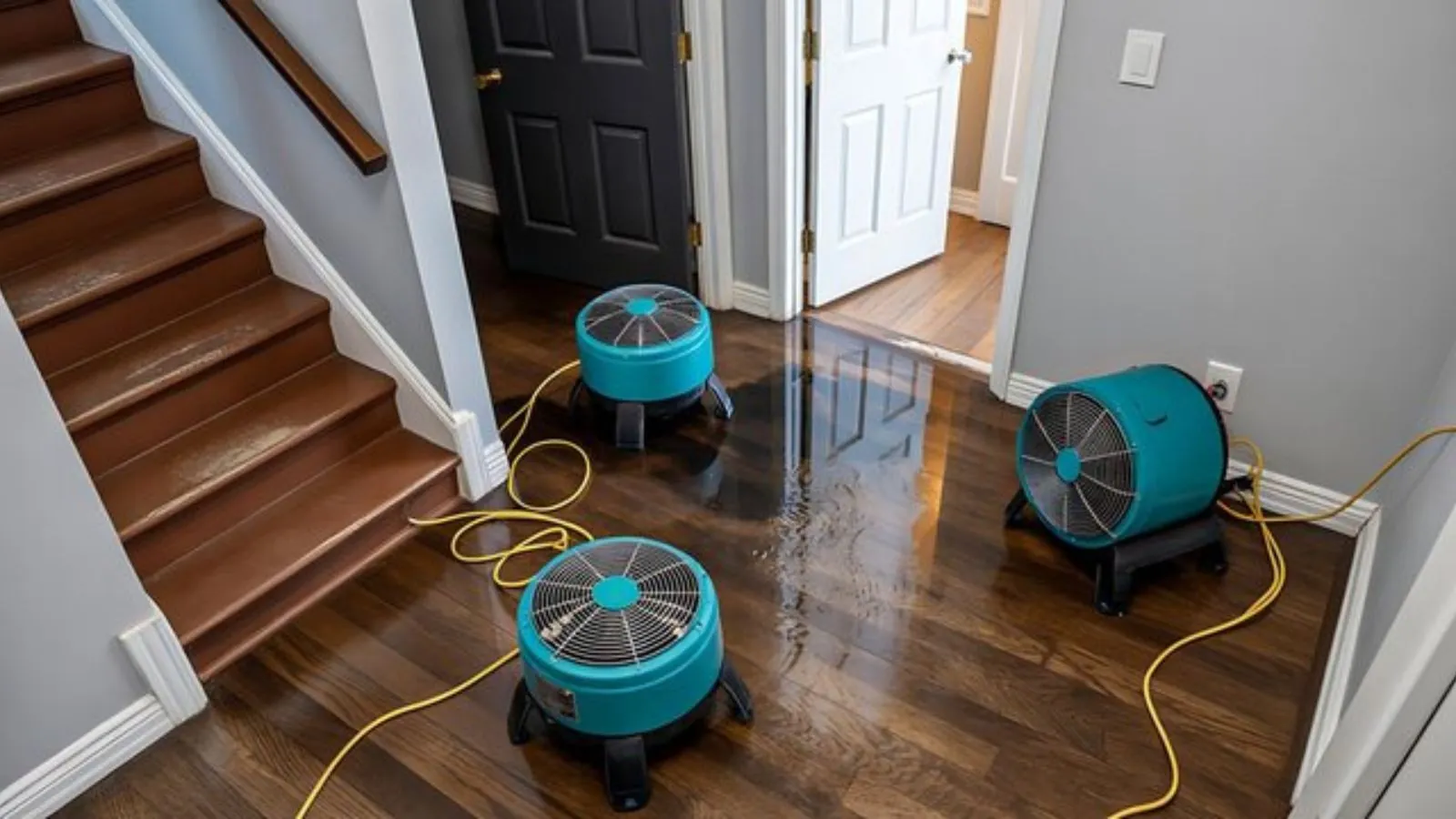
A water damage assessment is the first real step of a restoration job. Before pumps, air movers or tear-out, the crew has to know what it is dealing with. That means finding the source, mapping wet areas, identifying the type of water and deciding which materials can be dried in place. A good assessment ends with a written scope that you can read, question and compare.
The process below describes how restoration crews typically work. It follows the structure of the ANSI/IICRC S500 standard for professional water damage restoration. Each building is different, so a crew adjusts the plan once it sees the conditions. We do not promise an arrival time on the phone, because it depends on the job and traffic.
Question 1: where did the water come from?
The source decides the safety steps. A supply line break, a washer hose, a leaking roof and a sewer backup all behave differently. The crew asks what you saw and heard, when it started and whether it has been stopped. Then it looks for the actual source, because a job that only dries and never finds the leak will be wet again. Pages like burst pipe damage and sewage backup cleanup describe how different sources change the plan.
Question 2: what category of water is it?
The S500 standard sorts water into three categories by how contaminated it is. This is a safety decision as much as a technical one.
| Category | Examples | General handling |
|---|---|---|
| Category 1 | Broken supply line, overflowing sink with clean water | Often dried in place when caught quickly |
| Category 2 | Washer or dishwasher discharge, sump overflow | Carpet pad and some porous materials commonly removed |
| Category 3 | Sewage, rising floodwater, long-standing water | Porous materials usually removed, with protective gear |
Water can move up a category over time. Clean water that sits for a day or two in warm, closed spaces can degrade. That is one reason the assessment cannot wait until the weekend if the water is still present.
Question 3: how far did it spread?
Water travels. It runs under baseboards, wicks up drywall, drops through ceilings and moves along joists. A visible puddle is rarely the whole story. Crews use several tools to find wet material you cannot see.
- A moisture meter with pins or pads to read wood, drywall and plaster
- A thermal camera, which can show temperature patterns that suggest hidden moisture
- A hygrometer to read air temperature and relative humidity
- Visual and touch checks of baseboards, cabinets, ceilings and flooring edges
The readings are recorded on a sketch or a log. Later in the job the same points are read again, so there is evidence of drying progress. A thermal camera is a screening tool, and meter readings confirm what it suggests.
Not sure how far the water went?
Call the 24/7 line and describe what is wet. The crew reads the building and explains the scope.
Question 4: what can be saved?
Many materials can be dried in place if the water is clean and the response is quick. Others cannot. The assessment sorts each material into dry in place, clean and dry, or remove and replace. Carpet pad and insulation that have soaked through are common removals.
Hardwood and subfloor are judged by moisture content and by how they respond to drying, see hardwood floor water damage. Drywall that has wicked high above the waterline may be cut so the cavity can dry.
EPA guidance says to dry wet materials within 24 to 48 hours to prevent mold growth. If something has been wet longer than that, the assessment also looks for signs of growth. Visible mold and a musty smell are reasons to slow down and read the mold page, mold remediation in Hempstead.
The written scope and the price
After the walkthrough, the crew explains what it found and what it recommends. That includes the extraction method, the drying equipment and number of days expected, what will be removed and a price. The scope and price should be explained before work starts. We do not publish dollar figures here, because no number fits every loss, but we explain the factors that drive the price on every job.
- Water category and how long the water sat
- Square footage and height of the wet area
- Materials affected and whether they are dried or removed
- Number of drying days and equipment used
- Repairs after drying, such as drywall, paint and flooring
What you can do before the crew arrives
- Stop the water if it is safe, and avoid outlets and wet electrical equipment.
- Take photos and video for your records.
- Move small valuables and furniture legs off wet floors.
- Open nothing that would spread contaminated water.
- Write down when it started and what you noticed.
Assessing multi-unit and commercial buildings
Apartment buildings and shops add steps to an assessment. The crew has to find out which units share the affected wall, ceiling or riser, who needs notice and which areas are occupied. Readings are taken in each affected space, and the scope notes what belongs to the owner and what belongs to a tenant. Our page on commercial water damage restoration covers how documentation works for owners, managers and insurers.
Larger buildings also raise access questions. Ceiling cavities, mechanical chases and basement utility rooms can hide water that has traveled a long way. A careful assessment includes those places, because skipping them can leave a wet pocket that restarts the problem a few weeks later.
Assessments in Hempstead homes and buildings
Hempstead has older masonry and wood-frame buildings, mid-century homes and newer construction. The structure changes how water moves. Plaster, brick and older framing hold moisture differently from modern drywall, so a crew reads each building instead of applying one routine.
In downtown buildings with shops below and apartments above, water in one unit can travel through shared walls. Our page on downtown Hempstead water damage covers that setting. Our service area page lists the surrounding towns.
A thorough assessment is not a sales step. It is the record that everything else depends on, from equipment choices to insurance paperwork. Ask to see the readings.
Frequently asked questions
What does a water damage assessment include?
The source, a water category, moisture readings, a map of wet areas and a written scope with a price explained before work starts.
Do you use moisture meters and thermal cameras?
Yes. Meters measure moisture in materials, and a thermal camera helps find hidden wet areas that the meter then confirms.
Can water damage be assessed over the phone?
A call helps the crew prepare, but a real assessment needs readings in the building.
Do you assess water damage at night or on weekends in Hempstead?
Yes. The line is answered 24/7, including nights and weekends. Describe the water and the source and a crew is arranged.
Will the assessment tell me if there is mold?
It looks for visible growth and odor. New York requires licensed professionals for mold assessment and remediation, so a mold question may need a separate step.