
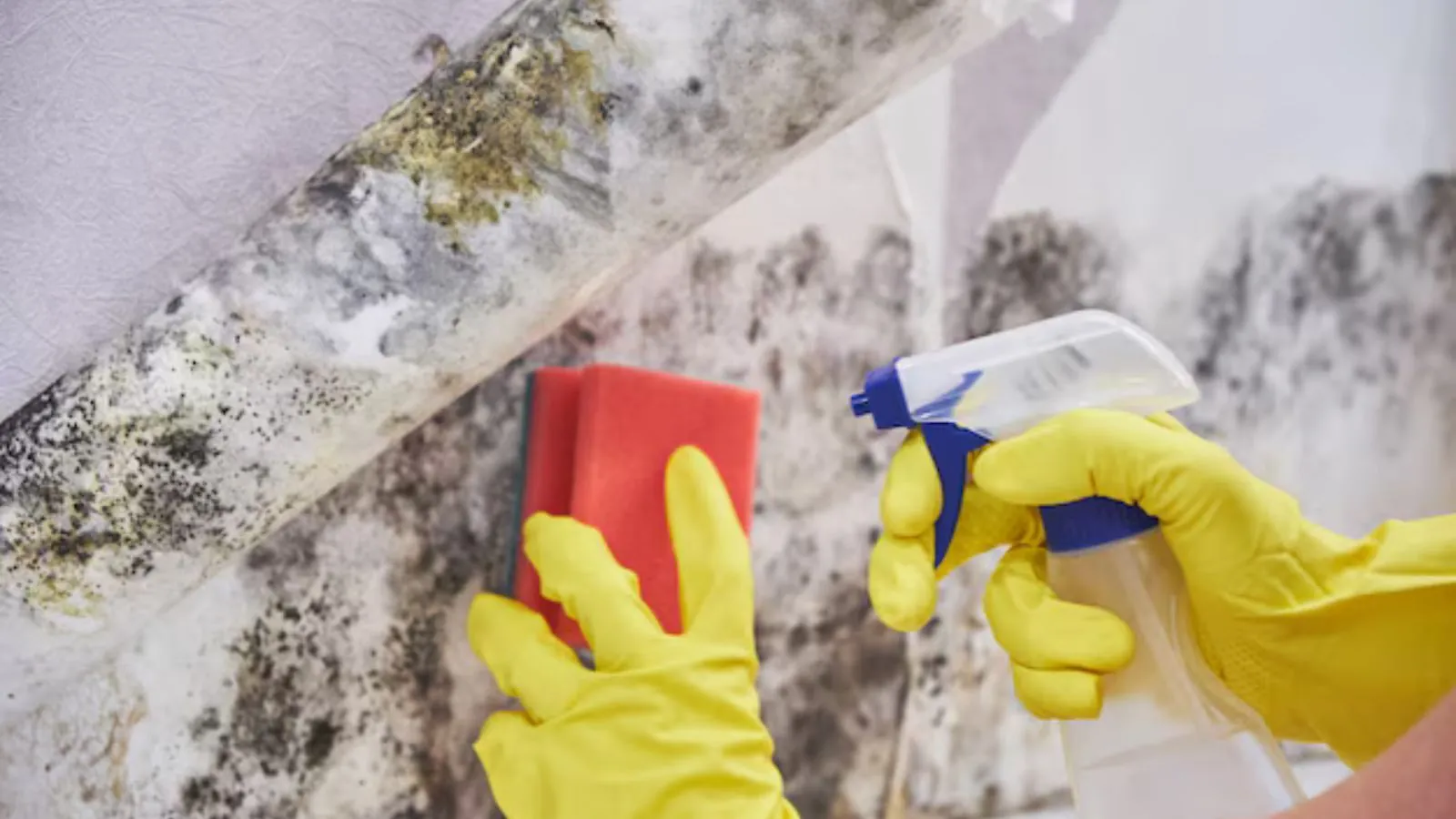
Search results for this question are full of alarming claims. We want to be direct about our role. We restore buildings after water damage. We are not physicians, and we do not diagnose, treat or predict health effects of any kind. If you or someone in your home has symptoms and you are worried about mold, please talk to a doctor. The rest of this article covers what we can explain responsibly.
That means the meaning of the term, what dark growth in a home usually tells you about moisture and what to do about it. The guidance here draws on the Environmental Protection Agency, which says the key to mold control is moisture control, and on New York rules for mold work.
What people mean by black mold
The phrase is a popular label, not a scientific category. Mold comes in many colors, including black, green, white, gray and orange, and color alone does not identify what a growth is. Many different molds look dark. Telling them apart takes a trained assessor and, in some cases, laboratory analysis. You cannot reliably identify a mold by looking at it, and neither can we.
That matters because the plan for dealing with growth does not depend on the nickname. The plan depends on how much there is, what material it is on, where it is and what moisture is feeding it. Whatever color it is, the same questions apply.
What dark growth tells you about your building
Mold needs moisture, and it needs a material to grow on. Dark spots on a bathroom ceiling, the back of a closet wall, the underside of a sink cabinet or a basement corner usually mean water has been present, sometimes for a long time. The growth is a symptom, and the water is the cause. This is why mold and water damage so often appear together.
- Persistent dampness from a slow leak or a missed spill
- Condensation on cold surfaces in poorly ventilated rooms
- Flood, storm or sewer water that was not dried quickly
- Roof or window leaks that wet insulation and framing
- Wet carpet or pad that stayed damp for more than a day or two
EPA guidance advises drying water-damaged areas and items within 24 to 48 hours to prevent mold growth. If a wet area was dried in that window, mold usually will not grow. If it sat longer, growth becomes more likely.
Dark spots after a leak?
Call the 24/7 line. We explain the water side and tell you plainly when a licensed mold specialist is needed.
Health questions go to a physician
You will see many claims online about symptoms, illnesses and dangers tied to particular molds. We do not repeat them, because we cannot evaluate them for your household. People differ, and a doctor who knows your history is the right person to ask. Public health agencies, including the EPA and the Centers for Disease Control and Prevention, publish general information on mold and health that you can read for yourself.
If you are concerned, move the conversation to a medical professional and keep a record of what you see in the home, such as photos and the dates of any leaks. That record helps whoever you consult.
What to do if you find dark growth
| Situation | Reasonable first step |
|---|---|
| Small spot on a hard surface, known cause now fixed | Fix the moisture source and dry the area. EPA says small areas under about 10 square feet can often be handled by the homeowner. |
| Growth larger than about 10 contiguous square feet | Stop and ask. New York licensing rules apply to projects that size, see mold remediation. |
| Musty odor but nothing visible | Look for hidden moisture, such as a leak or damp wall cavity. A crew can take moisture readings. |
| Growth after sewage or floodwater | Treat it as a larger problem and call, see sewage backup cleanup. |
| Dark staining in a rented unit | Tell the landlord in writing and keep photos. |
EPA also notes that bleach is not recommended as a routine part of mold cleanup, and that chlorine bleach must never be mixed with ammonia-containing cleaners because toxic fumes could be produced. Scrubbing a large area or disturbing it with a vacuum can spread material around the home. When in doubt, leave it alone and ask.
Rules for mold work in New York
New York regulates mold assessment and remediation under Article 32 of the Labor Law, with licensing overseen by the Department of Labor. In general, the rules apply to projects of more than 10 contiguous square feet, and the assessor and remediator must be independent of each other. That means a company that removes the mold should not also be the one that writes the plan and clears the job on the same project.
We stay within what the rules allow. For the water source we dry and repair, and for regulated mold work we explain the process and the licensing. Our own process follows ANSI/IICRC S500 for water and S520 for mold guidance as references.
Talking to your landlord, insurer or employer
If the growth is in a rental, give the landlord written notice with dated photos and describe where the water came from if you know. If you own the home, tell your insurer about the water event and ask how mold is treated under your policy. If it is a workplace or a commercial building, notify the manager or owner. In every case, keep the written record. It protects you and speeds up the repair.
Dark growth in Hempstead buildings
Hempstead buildings range from older masonry and wood-frame houses to apartments and downtown mixed-use structures. Basements, closets against exterior walls and bathrooms with weak ventilation are common places for dampness to collect. A leak in one unit of a shared building can show up as staining in the next.
If you are near Main Street or Fulton Avenue, see downtown Hempstead water damage. Towns we cover are on the service area page, and basement water damage cleanup explains how below-grade rooms are dried.
The takeaway is simple. Treat dark growth as a sign of moisture, fix the water first, protect the rest of the home from disturbance and ask a physician about any health worry.
Frequently asked questions
Is black mold dangerous?
We cannot answer health questions. Please ask a physician. We can explain how to find and dry the moisture that feeds growth.
Can you tell what kind of mold I have by looking at it?
No. Color does not identify a mold. A licensed assessor and, if needed, a laboratory can identify what is present.
Should I clean dark growth with bleach?
EPA says bleach is not recommended as a routine part of mold cleanup, and it must never be mixed with ammonia-containing products.
When does New York require a licensed mold professional?
In general, for projects larger than 10 contiguous square feet. Check the Department of Labor for current rules.
Do you handle mold caused by water damage in Hempstead?
We handle the water and drying side and explain the licensed mold steps. Call the 24/7 line and describe what you see.